 TutorialKart.com
Why Salesforce CRM is #1 on Demand
Salesforce is often described as the world’s #1 CRM because it has been ranked first in CRM applications by IDC revenue market share. In 2026, Salesforce stated that IDC ranked it the #1 CRM provider for the 13th consecutive year, with Salesforce leading CRM vendors in 2025 market share. This ranking is about CRM application revenue share, not a guarantee that Salesforce is the best choice for every company or every budget.
The phrase why Salesforce CRM is #1 on demand CRM is usually used to explain why many organizations choose Salesforce as a cloud CRM platform. Salesforce combines sales, service, marketing, commerce, analytics, data, automation, AI, APIs, and application development tools in one connected ecosystem. It is delivered as cloud software, so users can access it through a browser or mobile app without installing a traditional on-premise CRM system.
What “#1 CRM” means for Salesforce CRM users
“#1 CRM” should be understood carefully. It does not mean every Salesforce implementation is automatically simple, inexpensive, or successful. It means Salesforce holds a leading position in the CRM applications market according to market-share research. A successful Salesforce implementation still depends on clear requirements, clean data, suitable licenses, good administration, user training, integration planning, and realistic governance.
Salesforce CRM is the product family of Salesforce.com Inc Corporation Company. Salesforce was co-founded by Marc Benioff and others in 1999, and the company later changed its legal name from salesforce.com, inc. to Salesforce, Inc. The older name Salesforce.com is still commonly used in tutorials, job descriptions, and beginner discussions.
Salesforce CRM features that explain its demand
- Cloud and on-demand CRM: Salesforce is delivered through the cloud, so users can access CRM records, reports, dashboards, and business apps from supported browsers and mobile devices.
- Standard CRM applications: Salesforce provides standard applications for sales, service, marketing, commerce, analytics, and customer data, depending on the products and licenses selected.
- Customisation and configuration: Standard Salesforce applications can be configured with objects, fields, page layouts, record types, validation rules, flows, approval processes, reports, dashboards, and permissions.
- Salesforce Platform: The older term Force.com platform refers to the platform capabilities used to build custom applications. Today, this is usually discussed as the Salesforce Platform, with tools such as Flow, Apex, Lightning Web Components, APIs, and metadata.
- Integration options: Salesforce can be integrated with other on-premise and on-cloud applications through APIs, middleware, AppExchange packages, MuleSoft, and custom integration patterns.
- Family of solutions: Salesforce has products for sales, service, marketing, commerce, data, analytics, portals, collaboration, and AI-assisted customer workflows.
- International reach: Salesforce is used across many countries and industries, but every organization should still check data residency, compliance, security, and licensing requirements before implementation.
- Continuous product updates: Salesforce releases product updates regularly, so administrators and developers must keep track of release notes, deprecated features, and recommended platform practices.
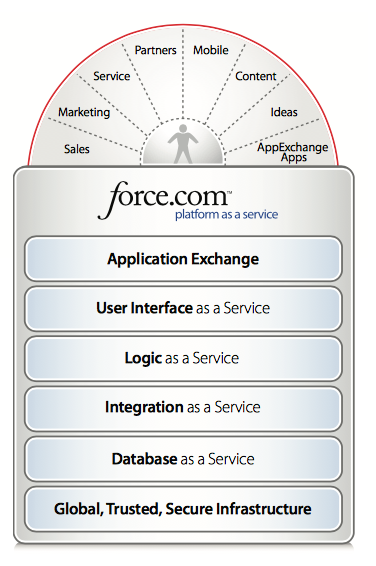
Why Salesforce CRM is in demand for sales and service teams
Salesforce CRM is in demand because many businesses need one place to manage customer data and customer-facing work. In a sales team, Salesforce can track leads, accounts, contacts, opportunities, products, quotes, tasks, activities, forecasts, and reports. In a service team, Salesforce can track cases, knowledge articles, service channels, entitlements, escalations, and customer history.
Without a CRM, customer information may remain scattered across spreadsheets, emails, chat messages, and personal notes. Salesforce helps teams standardize that information into structured records, security-controlled access, automation, and reporting. This is one reason Salesforce is commonly considered when a company needs better visibility into pipeline, customer service, account management, and revenue operations.
Salesforce on-demand CRM compared with traditional CRM systems
| Area | Salesforce on-demand CRM | Traditional on-premise CRM |
|---|---|---|
| Access | Usually accessed through browser and mobile app | Often installed and maintained on company-managed infrastructure |
| Infrastructure | Salesforce manages the core cloud platform | The organization manages more infrastructure, upgrades, and server maintenance |
| Updates | Regular Salesforce releases and platform updates | Updates depend on internal upgrade planning and vendor support model |
| Customization | Configuration-first tools, Flow, Apex, Lightning pages, APIs, and AppExchange packages | Customization depends on the product, hosting model, and internal technical stack |
| Integration | APIs, middleware, MuleSoft, AppExchange, and custom integrations | Integration approach varies based on legacy systems and architecture |
Salesforce Customer 360, AI, data, and AppExchange ecosystem
Modern Salesforce CRM is not limited to storing contact details. Salesforce positions its CRM around connected customer data, applications, automation, analytics, and AI. Product names can change, but the broader idea is that sales, service, marketing, commerce, data, and analytics teams can work from a shared customer view when the system is implemented correctly.
- Customer 360: A Salesforce concept for connecting customer information across departments and products.
- Data Cloud / Data 360: Salesforce data capabilities used to unify and activate customer data across systems, depending on the implementation.
- Agentforce: Salesforce AI agent capabilities for business workflows, built around Salesforce data and automation.
- AppExchange: Salesforce’s marketplace for apps, components, consultants, and extensions that can add functionality to an organization.
- APIs and MuleSoft: Integration options used to connect Salesforce with ERP, finance, ecommerce, data warehouse, and other enterprise systems.
Where Salesforce CRM may not be the right fit
Salesforce is widely used, but it is not the right answer for every business problem. It can become costly or complex if the organization buys more products than it needs, customizes without governance, ignores data quality, or treats CRM implementation as only a software installation. The platform is strongest when business processes are clearly defined and the implementation team understands Salesforce security, data model, automation, and integration design.
- Small teams with very simple contact tracking needs may not need a full Salesforce implementation.
- Organizations with poor data discipline may struggle unless they plan data cleanup and ownership.
- Heavy customization without documentation can make future changes difficult.
- Licensing and add-on costs should be reviewed before selecting products.
- Salesforce should be compared with CRM alternatives based on actual business requirements, not only market-share ranking.
Different career paths in Salesforce CRM
When we talk about Salesforce, there are many career paths. For a beginner, three common paths are administrator, developer, and consultant. These roles often work together in the same Salesforce project.
- Administrator.
- Developer.
- Consultants.
Salesforce Administrator
A Salesforce Administrator maintains the Salesforce organisation. The administrator manages users, profiles, permission sets, roles, fields, page layouts, record access, reports, dashboards, automation, data quality, and day-to-day support for business users.
- Administrator handles users, access, security settings, and configuration.
- Administrator helps maintain data quality, imports, exports, reports, and dashboards.
- Administrator supports release changes, sandbox refresh planning, and user adoption.
Salesforce Developer
A Salesforce Developer builds and customises applications when configuration alone is not enough. Developers may work with Apex, Lightning Web Components, SOQL, APIs, integrations, automated tests, deployment tools, and source control. A good developer also understands the Salesforce security model and governor limits.
Salesforce Consultant
A Salesforce Consultant understands the business requirement and converts it into a Salesforce solution approach. The consultant works between business users and the technical team, helping define processes, data requirements, integrations, reports, user journeys, testing, training, and rollout plans.
Official Salesforce references for CRM ranking and product context
Because CRM rankings, product names, and AI capabilities change over time, verify current details with official Salesforce pages before making licensing or implementation decisions.
- Salesforce page on the world’s #1 CRM claim
- Salesforce news page on IDC CRM market share ranking
- Salesforce CRM product overview
- Salesforce official explanation of what Salesforce is
- Salesforce Help for current product documentation
Why Salesforce CRM is #1 on demand FAQ
Why is Salesforce called the #1 CRM?
Salesforce is called the #1 CRM because it has been ranked first in CRM applications by IDC revenue market share. This is a market-share ranking, not a promise that Salesforce is the best fit for every organization.
What is the #1 CRM in the world?
Based on Salesforce’s published IDC market-share references, Salesforce is ranked as the #1 CRM provider. The exact ranking basis should be checked in the latest IDC and Salesforce references because market categories and reporting periods can change.
Why is Salesforce CRM in demand?
Salesforce CRM is in demand because it provides cloud-based customer data management, sales automation, service management, reporting, dashboards, integration options, AppExchange extensions, and platform tools for custom business apps.
Is Salesforce only useful for large companies?
No. Salesforce has products used by different sizes of organizations, but it is especially important to match the edition, licenses, configuration, and implementation effort to the company’s actual requirements. Smaller teams should compare cost, complexity, and administration needs before adopting it.
Does Salesforce CRM require coding?
Not always. Many Salesforce requirements can be handled by administrators using configuration and Flow. Coding with Apex, Lightning Web Components, or APIs is used when the requirement needs custom logic, custom user interfaces, integrations, or advanced platform behavior.
Salesforce CRM demand editorial QA checklist
- Check that “#1 CRM” is explained as an IDC revenue market-share claim, not as a blanket recommendation for every company.
- Keep the existing Salesforce image and existing Salesforce.com link unchanged when editing this post.
- Verify current Salesforce product names such as Salesforce Platform, Data Cloud / Data 360, Agentforce, AppExchange, and Customer 360 before adding new product claims.
- Do not describe Salesforce administrators as server administrators; focus on users, security, data, automation, reports, sandboxes, and configuration.
- Keep the career path section practical by separating administrator, developer, and consultant responsibilities clearly.
- Avoid adding volatile employment-news questions unless the article is being updated as a current-news post with dated sources.